Fiber vs. Cable Internet: What Actually Matters
Download speed is the number on the ad. Symmetry, congestion, and latency are the three that decide how the connection actually feels. Here's how to tell them apart.
By SilverStar Internet
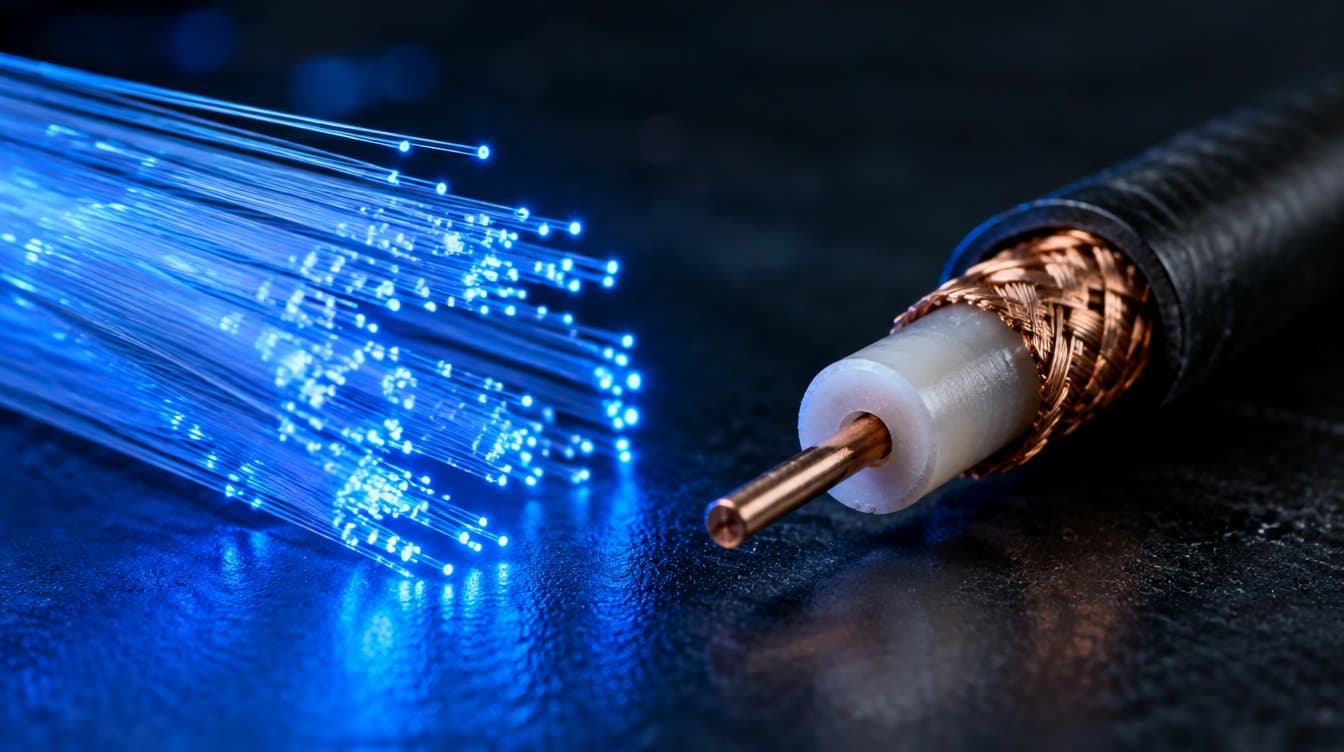
Almost every internet decision comes down to a single number on a sales sheet: download speed. It is the easiest thing to advertise and the easiest thing to compare. It is also the number that hides the three differences that actually determine whether a connection helps you or gets in your way.
The first is symmetry. Cable is asymmetrical by design. A plan advertised at 300 Mbps down commonly pairs it with 10 to 20 Mbps up, because the coax network was built to deliver television to homes, not to send data out of them. Fiber is symmetrical: a 500 Mbps fiber plan uploads at 500 Mbps. That gap shows up every time you join a video call, back up a laptop, push camera footage to the cloud, sync files, or send a large project to a client.
The second is congestion. Cable subscribers share bandwidth across a neighborhood node, which is why the connection that tested fine at 10am feels different at 8pm. A fiber line to your building is not shared that way, so evening performance looks like morning performance. If you have ever run a speed test to prove a problem and gotten a great result at the wrong time of day, this is usually why.
The third is latency. Speed is how much data moves; latency is how long it takes to start moving. Fiber typically delivers single-digit to low double-digit millisecond latency with very little variation between packets. That consistency, not raw throughput, is what makes a video call feel natural, a game feel responsive, and a remote desktop session feel like a local one.
So the useful question is not "how many megabits?" It is: is this connection symmetrical, is the bandwidth dedicated or shared, and how does latency hold up under load? Those three answers predict your day-to-day experience far better than the headline number does.