Metro Ethernet & Transport
Private Metro Ethernet, point-to-point, and dedicated transport that connect your sites like one network, with no public internet in the middle.
Check availability
Send us the service address and a SilverStar specialist will confirm your options for metro ethernet & transport.
Installation & coverage
Private transport designed around how your sites connect
Metro Ethernet and dedicated transport create predictable paths between offices, data centers, and carrier interconnects. SilverStar maps the topology, engineers the handoff, and manages the connection end to end.

Private connectivity between sites
Metro Ethernet, point-to-point, and dedicated transport explained
Metro Ethernet is a private Layer 2 connection between business locations within a metropolitan area, delivered over fiber and presented to your equipment as a standard Ethernet handoff. Because your sites sit on the same private network, they behave like one LAN: no VPN overhead, no address translation between sites, no public internet in the path. Point-to-point, sometimes called E-Line, links exactly two locations with committed bandwidth in both directions, which is the usual choice for connecting an office to a data center or a main site to a single branch. Point-to-multipoint, or E-LAN, joins three or more sites onto a shared private domain so every location can reach every other one, which suits multi-branch organizations with central applications or shared storage. Dedicated transport, sometimes called wavelength or private line service, provides a high-bandwidth path between two specific endpoints, typically your facility and a colocation cage, carrier hotel, or cloud on-ramp. The common thread is determinism. Bandwidth is committed rather than best-effort, latency stays inside a known range, and one provider owns the circuit end to end, so when something needs attention there is one number to call. SilverStar engineers Metro Ethernet and transport across Oregon and Washington and manages the full path.
Metro Ethernet (E-LAN)
High-capacity private Layer 2 connectivity joining three or more locations onto one network.
Point-to-point (E-Line)
A dedicated private link between two sites with committed bandwidth in both directions.
Dedicated transport
Clean, high-bandwidth paths to data centers, colocation cages, and carrier interconnects.
Overview
Why metro ethernet & transport from SilverStar
Connecting offices over the public internet means every packet between your sites takes an unpredictable path through networks nobody controls. VPN encryption fixes the privacy problem but not the performance one: latency drifts, throughput varies, and troubleshooting turns into a finger-pointing exercise between carriers.
Metro Ethernet solves it differently. Your locations connect over a private Layer 2 network with committed bandwidth on a path we engineer and manage end to end. Traffic between sites never touches the public internet, so file shares, backups, application traffic, and voice move at consistent speed with predictable latency.
We design point-to-point and point-to-multipoint Ethernet and dedicated transport around your actual topology, whether that is two buildings across town, a dozen branches across the region, or a clean high-bandwidth path into a data center or carrier hotel.
What you get
Features built around reliability
Engineered, installed, and supported by a local team, not a best-effort box.
Metro Ethernet (E-LAN)
High-capacity private Layer 2 connectivity joining three or more locations onto one network.
Point-to-point (E-Line)
A dedicated private link between two sites with committed bandwidth in both directions.
Dedicated transport
Clean, high-bandwidth paths to data centers, colocation cages, and carrier interconnects.
Predictable latency
An engineered path with known latency characteristics, not a route the internet picks that morning.
Scalable capacity
From 10 Mbps to 10 Gbps, sized per site and adjusted as traffic between locations grows.
One accountable provider
We own the circuit end to end, so troubleshooting never becomes a carrier-versus-carrier argument.
Metro Ethernet vs. site-to-site VPN
A VPN tunnel over two internet circuits is the inexpensive way to connect sites, and for some organizations it is the right call. Where it stops being the right call is usually predictable:
- Performance: VPN throughput is capped by the slower internet circuit and the encryption overhead on both firewalls
- Consistency: internet routing between your sites can change hour to hour, and so can latency
- Accountability: two internet providers plus your firewall vendor means three parties when something degrades
- Simplicity: Ethernet sites share one private Layer 2 domain, so there is no tunnel to build, monitor, or rebuild
- Sensitive traffic: storage replication, database sync, and imaging transfers are the workloads that most often justify the move
Choosing a topology
The right shape follows from where your applications live and how sites actually talk to each other.
- Hub and spoke: branches connect back to a main site or data center holding the core applications
- Any-to-any: every location reaches every other directly, useful when teams collaborate across sites
- Point-to-point: one dedicated link, typically headquarters to a colocation facility
- Hybrid: private Ethernet between sites plus dedicated internet access at each one for cloud traffic
Why SilverStar
Engineered locally, supported locally
The same team that designs and installs your connection is the one that answers when you call.
25+ years
Decades of fiber engineering across the Pacific Northwest.
Our own network
We engineer and operate the path, so support can actually see your circuit.
Local support
Northwest-based people who know your setup, not a script.
Reviews
Why customers trust SilverStar
Homes and businesses across the Northwest rely on SilverStar fiber for speeds that hold up, local support, and a connection that keeps working after installation day.
CEO, CPA Firm
“Silver Star designed and installed our phone system end to end, and the support behind it has been outstanding. When we need something, they're responsive and they get it right.”
Executive Manager, City Government
“They brought fiber and hosted voice to all five of our sites and the upgrade has been rock solid. It's been a reliable backbone for the city's day-to-day operations.”
VP of IT, Shoe Manufacturer
“Silver Star is our primary data provider across both corporate and manufacturing. The service has been extremely reliable, exactly what we need to keep operations running.”
Featured insights
Practical guidance for better networks
Fresh articles from the SilverStar team on choosing, sizing, and getting the most out of an internet connection.
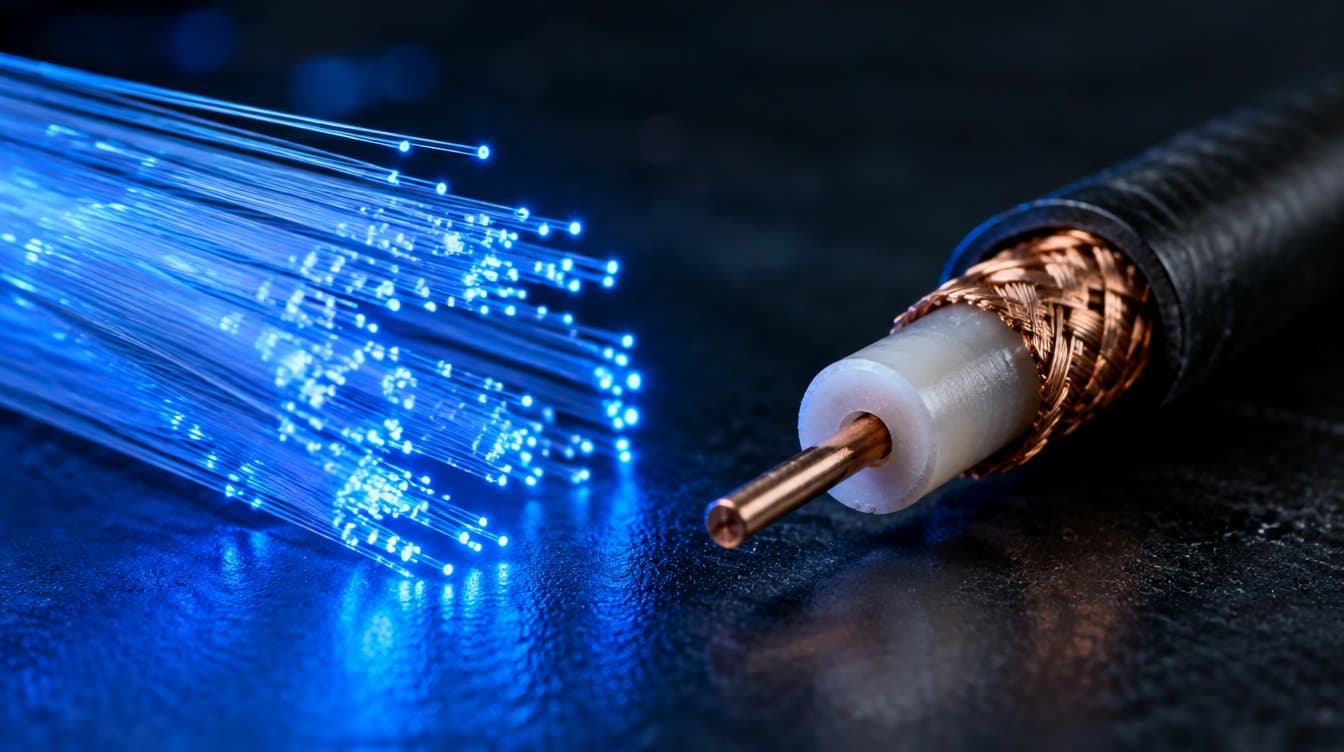
Fiber vs. Cable Internet: What Actually Matters
Download speed is the number on the ad. Symmetry, congestion, and latency are the three that decide how the connection actually feels. Here's how to tell them apart.
Read article →
Why Upload Speed Matters More Than You Think
Most internet plans give you a fast download and a thin upload. Here's the list of everyday things that run on the upload side, and what happens when it runs out.
Read article →
How Much Internet Speed Does Your Home Actually Need?
Buying more speed than you need is a common and expensive mistake. Here's a practical way to size a home internet plan around how your household really uses it.
Read article →FAQ
Metro Ethernet & Transport, questions answered
Common questions about this service. Don't see yours? Send us your address and we'll answer it directly.
- What is Metro Ethernet used for?
- Metro Ethernet privately connects business locations over a Layer 2 network with committed bandwidth and no public internet in the path. Applications, file shares, backups, voice, and data-center traffic move between sites at consistent speed with predictable latency.
- What is the difference between E-Line and E-LAN?
- E-Line is point-to-point, connecting exactly two locations, typically an office to a data center or a main site to a branch. E-LAN is point-to-multipoint, joining three or more sites onto one private domain so every location can reach every other one.
- Is Metro Ethernet more secure than a VPN over the internet?
- Your traffic stays on a private Layer 2 connection instead of traversing the public internet, which reduces exposure and gives you predictable performance. Many organizations still encrypt sensitive traffic on top of it, and the two approaches work together.
- When should we move from site-to-site VPN to Metro Ethernet?
- Usually when VPN throughput becomes a bottleneck, when inter-site latency starts affecting how applications feel, when troubleshooting keeps turning into a dispute between two internet providers, or when you begin replicating storage, syncing databases, or moving imaging files between sites.
- What is dedicated transport?
- A high-bandwidth private path between two specific endpoints, most often your facility and a colocation cage, carrier hotel, or cloud on-ramp. It is sometimes called private line or wavelength service and is built for capacity and predictability rather than general internet access.
- What bandwidth options are available?
- From 10 Mbps up to 10 Gbps, sized per site. Sites on the same private network do not all need the same capacity, so we size each location for its own traffic and adjust as needs change.
- Can we combine Metro Ethernet with internet access?
- Yes, and that hybrid is common. Private Ethernet carries traffic between your sites while dedicated internet access at each location handles cloud and public traffic. We design and manage both sides of it.
Ready when you are
See what's available at your address
Check availability at your address and see what fiber can do.